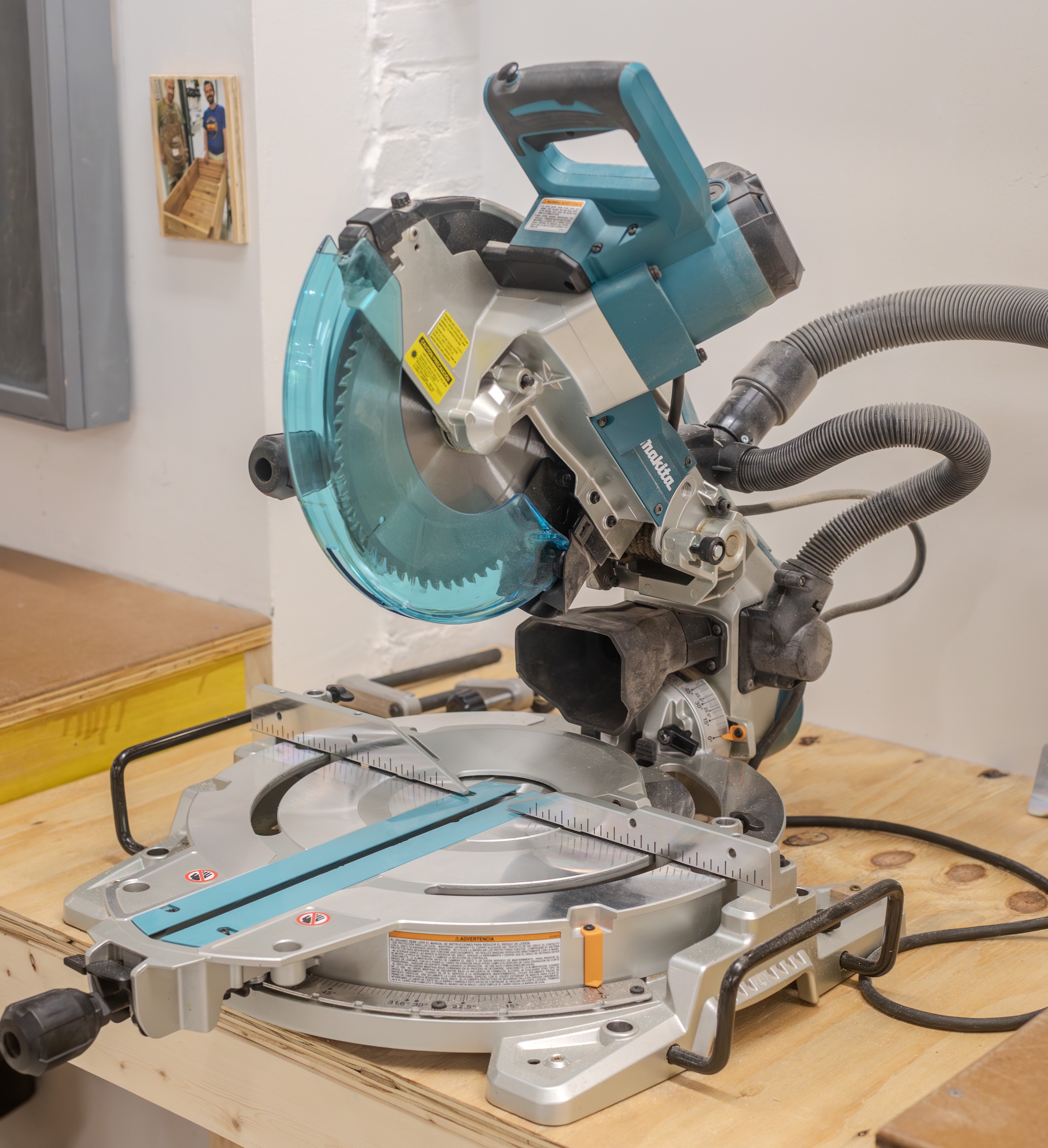
According to our friends at Wikipedia, the miter saw has been available in various forms since the 1970s, but it wasn’t until 1982 that the more familiar compound miter saw was introduced. The invention of the mechanism that allowed the saw to slide on rails eliminated the direct correlation between blade size and cutting capacity; translation - I don’t need a bigger blade to cut a larger workpiece. Nice! You’ll find an 8½” Makita compound miter saw at the Joinery, which, thanks to its sliding mechanism, can handle boards up to 12” in width.
Fun fact: The miter saw is often confused with the similarly named chop saw. The chop saw is typically used for cutting metal at 90 degree angles with an abrasive disc. The more you know!
Like any machine with a blade that spins at several thousand RPM, the miter saw is no exception to being potentially dangerous. Used properly, the miter saw can be a very safe tool to accomplish many tasks in the shop. Love and respect the miter saw and it will love you back.
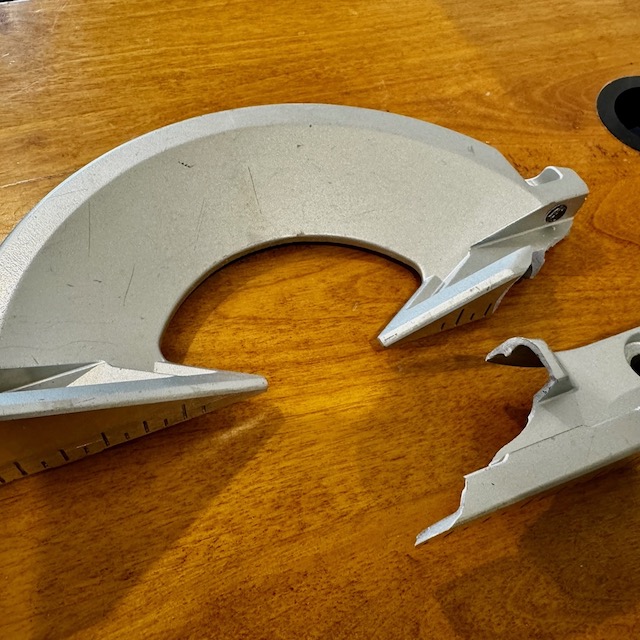
We had a recent incident with the miter saw here at Saratoga Joinery that is a reminder of the dangers that lurk. While our miter saw was a casualty of this incident, we are so grateful that no humans were harmed.
Here’s some guidance of how to stay on the miter saw’s good side:
Small workpieces and the miter saw don’t mix. Want to cut something under 12” in length? We’ve got other options for you like the band saw and table saw with cross cut sled. The miter saw needs that extra length so the workpiece can be secured properly.
The fence is your friend. Like the table saw, your workpiece should always (no seriously) be up against the fence. If your piece isn’t up against the fence, the miter saw will grab it, throw it, and potentially cause you and the saw serious damage. In the case of the miter saw, we do want a failure to launch!
Leave shapely pieces of wood to other machines. The miter saw really prefers a board with a flat face and jointed edge. This prevents things like blade pinching and kickback because the workpiece is fully supported by the table and fence of the saw. When attempting to cut rough lumber or anything a little bit funky, grab your friendly local Safety Coordinator for some guidance on how to cut your piece safely.
The miter saw is for cross cuts only. Don’t rip cut on a miter saw - that’s a job for the table saw. The table saw is already jealous of all the time you’re spending over there, so give it some love too!
Watch out for each other. Old habits die hard; people tend to revert to bad behaviors they’ve learned over time the more comfortable they become in a space or with a tool. Our Safety Coordinators, while amazing, can’t be everywhere at once (they aren’t super heroes after all, but are pretty darn close). If something sets off your spidey senses, you are probably not wrong. Grab a Safety Coordinator or offer a friendly helping hand if you think something could result in an injury or machine damage. One of the many great things about the Joinery is the community; we want everyone in our community to have a wonderful experience here which means staying safe and injury free!
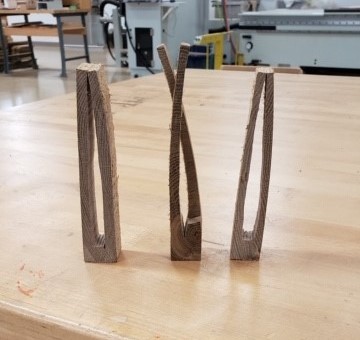
There were likely two major contributing factors to what caused the recent incident on our miter saw. One, the piece was much too small. The piece was small enough that it couldn’t be held securely or safely, resulting in the saw blade grabbing the piece. Two, we believe that the piece may have been case hardened. Case hardening is a phenomenon whereby internal stresses, trapped within the timber throughout the drying process, is abruptly set free as the saw blade makes its cut. For more on case hardening, see our post on the topic: When Wood Has Other Plans: A Primer on Case Hardening.
Despite its dangers, the miter saw still plays an important role in most shops, including ours. Follow a few simple suggestions and treat the saw with respect and you’ll have a long and fruitful working relationship with the saw. Don’t do that and, well, you’ve seen what damage can be done…
Have questions? Ask them! This post just scratches the surface of all there is to know about the miter saw. We love questions…way more than damaged machinery or injured members!


Saratoga Joinery is a 501(c)(3) nonprofit organization and relies upon the support of the community to keep our blades spinning.